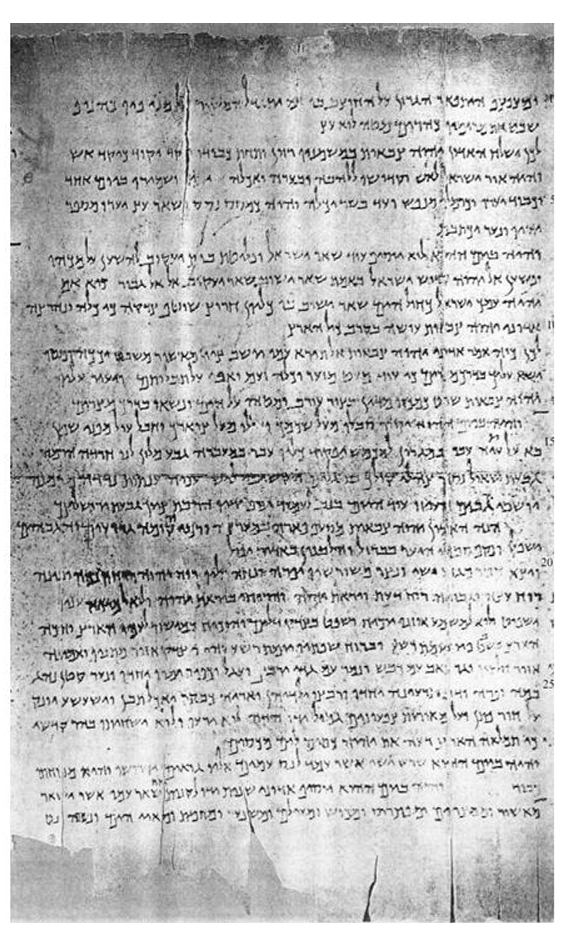
COLUMN 10 — THE GREAT ISAIAH SCROLL FROM QUMRAN (1QISAA): ORTHOGRAPHIC AND SCRIBAL FEATURES, ANALYSIS, AND TRANSLATION
Željko Stanojević
Institute for Hebrew Language and Literature, Belgrade
Independent Researcher in Hebrew Linguistics and Biblical Philology
ORCID: https://orcid.org/0009-0009-0717-6184
Published: 2026
ABSTRACT
This study presents a detailed philological, orthographic, and scribal analysis of Column 10 of the Great Isaiah Scroll from Qumran (1QIsaa), focusing on the textual segment corresponding to Isaiah 10–11. The research examines the physical characteristics of the manuscript, including the condition of the leather, cracks, folds, ink fading, and the absence of lacunae, offering insight into the material transmission of the text.
Structural features such as paragraph divisions and the use of spatia are analyzed, demonstrating an early system of textual segmentation that partially corresponds to later Masoretic and Greek traditions. Particular attention is devoted to scribal practices, including interlinear additions, orthographic expansion, the use of matres lectionis (yod and vav), omission and insertion of consonants, and correction marks indicating scribal self-editing.
A systematic comparison with the Masoretic Text shows that most variations are orthographic and morphological rather than semantic. These include differences in suffixation, verb forms, lexical choices, and the use of particles such as the definite article and the accusative marker. The findings indicate that the Qumran manuscript preserves a parallel textual tradition characterized by phonological transparency and flexible orthographic conventions.
The study contributes to a broader understanding of Qumran Hebrew, scribal culture, and the development of the biblical text during the Second Temple period, presenting Column 10 as a significant witness to early textual transmission.
KEYWORDS
Great Isaiah Scroll; 1QIsaa; Dead Sea Scrolls; Qumran; Qumran Hebrew; Biblical Hebrew; Hebrew philology; textual criticism; scribal practices; orthography; manuscript studies; Masoretic Text; Isaiah 10; Isaiah 11; Second Temple period; matres lectionis; textual transmission; paleography; biblical linguistics
DOI (Permanent Scholarly Version)
https://doi.org/10.5281/zenodo.19835812
FULL TEXT AND ACCESS
Direct PDF (institutional version): DOWNLOAD PDF
HCommons (open access version):
https://works.hcommons.org/records/wxbxq-nd592
Academia.edu version:
https://www.academia.edu/166053939/COLUMN_10_THE_GREAT_ISAIAH_SCROLL_FROM_QUMRAN_1QISAA_ORTHOGRAPHIC_AND_SCRIBAL_FEATURES_ANALYSIS_AND_TRANSLATION
RECOMMENDED CITATION
Stanojević, Željko. 2026.
Column 10 — The Great Isaiah Scroll from Qumran (1QIsaa): Orthographic and Scribal Features, Analysis, and Translation.
Zenodo. https://doi.org/10.5281/zenodo.19835812
RESEARCH PROJECT
The Great Isaiah Scroll from Qumran (1QIsaa): Orthographic and Scribal Features, Analysis, and Translation (Columns 1–54)
This study forms part of a comprehensive research project dedicated to the systematic philological, linguistic, and text-critical analysis of all fifty-four columns of the Great Isaiah Scroll. The project integrates orthographic data, scribal features, and comparative textual evidence across the entire manuscript.
DESCRIPTION
Column 10 is examined through an integrated philological and text-critical framework, with particular emphasis on orthographic variation, scribal intervention, and the classification of textual variants. The study includes detailed analysis of the manuscript’s physical condition and textual layout, including spacing (spatia), paragraph segmentation, and evidence of scribal corrections and supralinear additions.
Special attention is given to the transition between Isaiah 10 and Isaiah 11 as reflected in the Qumran manuscript tradition. Patterns of orthographic expansion, consonantal variation, and selected morphological features are identified and compared systematically with the Masoretic Text.
The analysis further explores the role of matres lectionis within the orthographic system of Qumran Hebrew, highlighting processes of phonological representation, scribal standardization, and textual fluidity. In addition to the analytical component, the work provides a structured English translation of the column, preserving key orthographic and textual features of the manuscript.
NAVIGATION
AUTHOR
Željko Stanojević is a Serbian Hebrew linguist and independent researcher specializing in Biblical Hebrew, Qumran studies, and textual criticism of the Hebrew Bible. His work focuses on orthographic systems, scribal practices, and the transmission history of ancient biblical manuscripts, with particular emphasis on the Great Isaiah Scroll (1QIsaa).